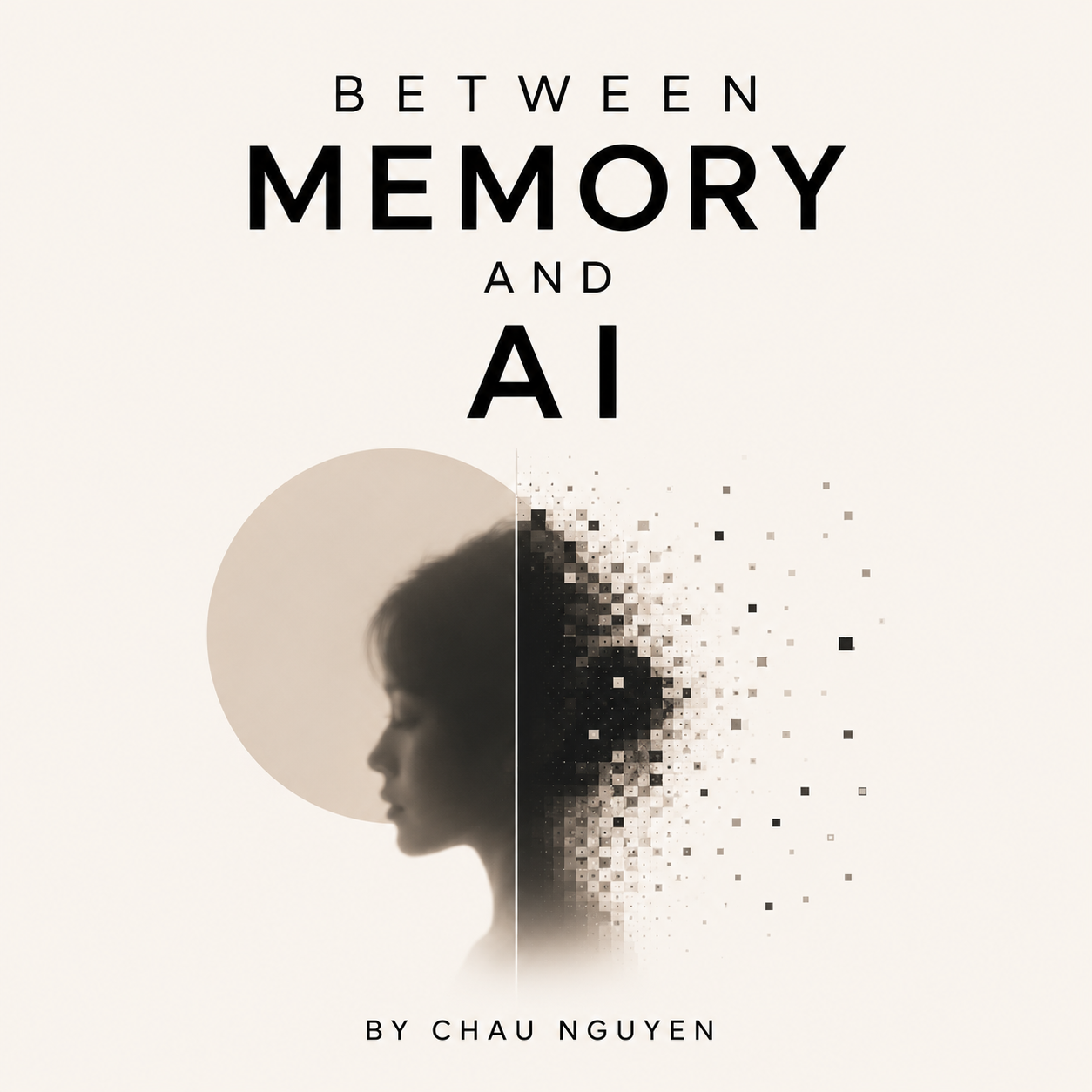
Between Memory and AI
By Chau Nguyen
One image that seized me in a dream was a photo my parent took when I was four. I was seated backwards in a gray chair, in my parents’ living room, with a kumquat tree behind me. There was a French door to my left. I wore slacks, striped pants, and a red sweater decorated with little stripes. The photo was taken with the flash on. During a family gathering, my mom chuckled at me and took this photo. It was then neatly placed in my family album, the little one with the off-white cover, with some text written at the bottom.
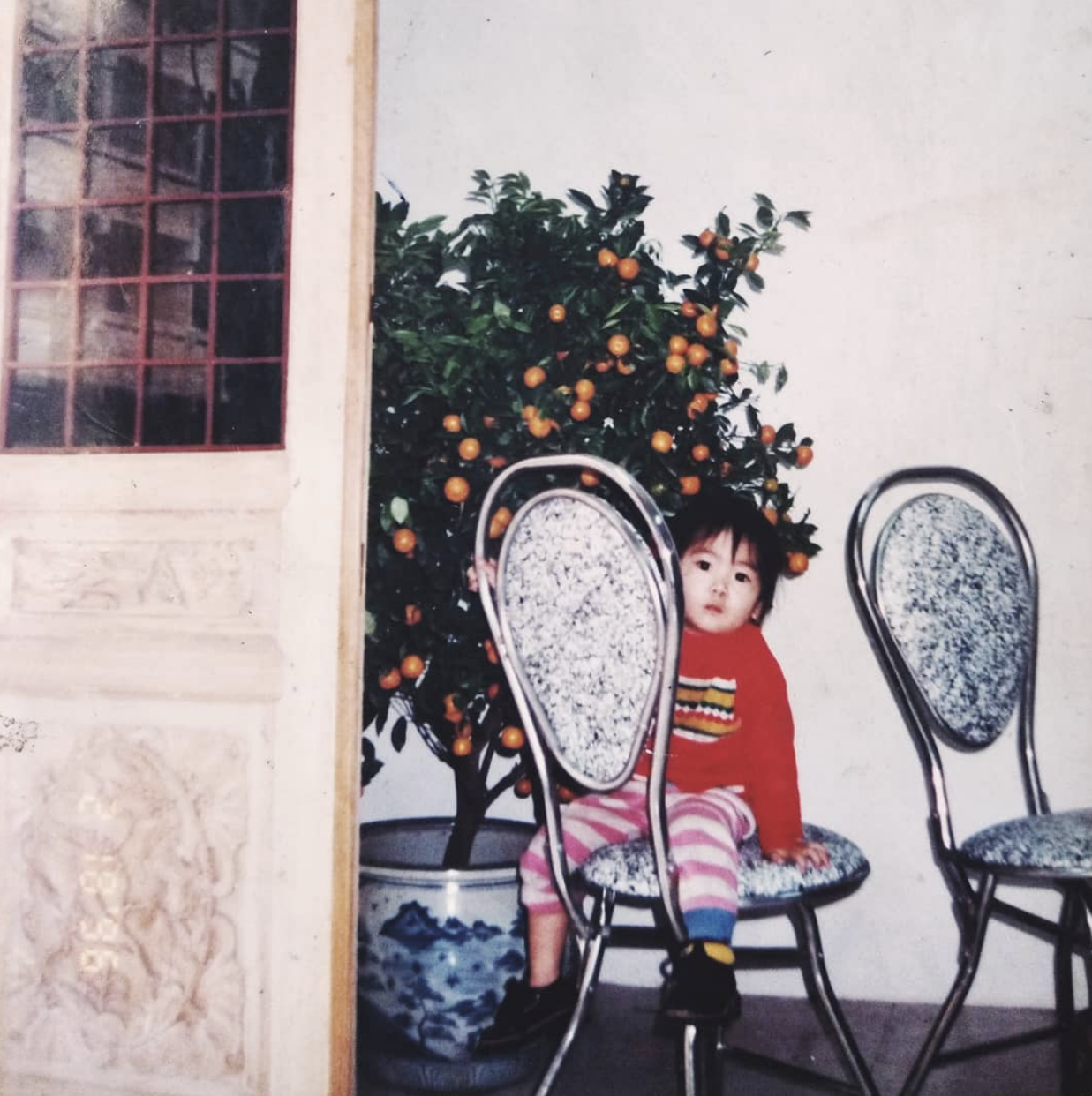
In the age of AI, with the easy manipulation of photos and deepfakes, I find myself recalling the genealogy of images. Distinguishing AI-generated videos from real ones has become increasingly challenging, while digitally rejuvenating faces in photographs has become routine. My memory becomes an anchor to the credibility of my existence. Since I glimpsed that image on Instagram six days ago, any subsequent manipulation must have been based on it. Human memory has become crucial, not as an anti-AI tool, but as living proof that I am writing this essay.
Dreams are often associated with memory. Research suggests that approximately 50% of dreams incorporate at least one component originating from a distinct experience during wakefulness. (Fosse et al., 2003). AI-generated user capability has produced an online dream-world of almost-people doing faux activities. I constantly enter this collective dream in hopes of finding my own. Hopefully I won’t dream of AI.
When we speak of originality, we often overlook genealogy. The origin of an image is vital to this conversation not only for those who require factual information, but also in understanding an image’s afterlife. As an image goes through an editing app or ChatGPT, it is turned into either frontend code (HTML, CSS, or React), or pixel-based diffusion (such as the Prequel app). Through the act of editing, the original image acquires an afterlife, reconstituted through code. The act of recontextualization depends upon a user's ability to assemble a reality that reflects their imagination. Whether the afterlife of images extends beyond this is irrelevant.
As our brains are trained for approximately seven hours daily to construct interpretations of our experiences, we create parallel dreams in AI. The smooth transition of brain to machine has yielded an explosion of AI images on the Internet. Per this logic, AI-me is a replicant who yearns for an origin (Do Androids Dream of Electric Sheep?, 1968). Understanding the genealogy of an image provides a means of locating its relationship to the real. The approximation of the real in AI-generated imagery also stresses this affinity. AI, our conscious dreaming, only materializes in the virtual, whereas the original images become a contracted reality.
Our understanding of AI may be traced through earlier encounters with constructed realities, particularly in traditional photography and in the meanings we attribute to dreams. Rather than existing in opposition to the real, AI and dreams also function as parallel realms through which reality becomes legible. They exist alongside the inner library of my memories as sites of remediation, where experience is continuously translated into new forms of representation.